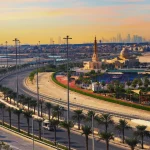



When people think of Bahrain today, they often picture a modern financial center, a growing digital economy, and a welcoming destination in the Gulf. Yet long before skyscrapers, international banks, and advanced infrastructure, Bahrain played a role that shaped the history of an entire region. For thousands of years, this small island nation served as a bridge between some of the world’s greatest civilizations, connecting cultures, merchants, and ideas across continents.
The Ancient Kingdom of Dilmun
Bahrain’s historical significance begins with the ancient civilization of Dilmun, which emerged more than 4,000 years ago. Mentioned in Mesopotamian texts dating back to around 2000 BCE, Dilmun was regarded as a prosperous trading kingdom and an essential gateway connecting Mesopotamia, the Indus Valley, and the Arabian Peninsula.
Archaeological discoveries suggest that Bahrain was the heart of Dilmun, thanks to its abundant freshwater springs and its ideal position along major maritime trade routes. Merchants transported copper from present-day Oman, precious stones from the Indus Valley, timber, textiles, and agricultural goods through Bahrain before distributing them across neighboring civilizations.
Rather than being defined by military conquest, Dilmun earned its reputation through trade, diplomacy, and economic cooperation. This commercial spirit would remain a defining characteristic of Bahrain for centuries to come.
A Crossroads for Cultures
Trade has always involved more than the exchange of goods. As ships arrived from different regions, they also carried languages, customs, beliefs, technologies, and new ideas.
Bahrain became a cultural crossroads where diverse communities interacted peacefully while conducting business. This openness encouraged innovation, strengthened commercial relationships, and created a society built on collaboration and mutual benefit.
Even today, Bahrain continues to reflect this tradition. Its multicultural workforce, welcoming business environment, and international outlook are modern expressions of values that have existed for thousands of years.
The Legacy of Pearls
Long before oil transformed Gulf economies, Bahrain’s prosperity was closely tied to natural pearls.
For centuries, Bahraini pearl divers ventured into the Gulf’s waters in search of pearls that became prized across Europe, India, Persia, and the Ottoman Empire. The industry supported thousands of families and attracted merchants from around the world, making Bahrain one of the leading centers of the global pearl trade.
This remarkable history has received international recognition. In 2012, UNESCO inscribed Bahrain’s Pearling, Testimony of an Island Economy, on its World Heritage List, recognizing the country’s unique relationship with pearling and its lasting contribution to world history.
Although cultured pearls eventually changed the global market, Bahrain’s pearling heritage remains a powerful symbol of resilience, craftsmanship, and entrepreneurship.
Archaeology That Continues to Surprise
Bahrain’s historical importance is supported by one of the richest archaeological landscapes in the Gulf.
Among its most remarkable discoveries are the Dilmun Burial Mounds, considered one of the largest prehistoric burial landscapes in the world. More than 11,000 burial mounds remain visible today, providing archaeologists with valuable insight into ancient society, trade, religion, and daily life.
Another significant landmark is Qal’at al-Bahrain, also known as the Bahrain Fort. This UNESCO World Heritage Site reveals evidence of continuous human settlement spanning approximately 4,500 years. Excavations have uncovered multiple layers of civilizations, illustrating how Bahrain evolved while maintaining its role as an important commercial center.
These sites continue to attract researchers, historians, and visitors who seek to understand the origins of Gulf civilization.
History Supporting a Modern Economy
Bahrain’s role as a connector did not end with ancient trade routes.
Today, the Kingdom has successfully positioned itself as one of the Gulf’s leading financial and business centers. According to the World Bank, Bahrain’s GDP reached approximately USD 46.8 billion in 2024, reflecting a diversified economy supported by financial services, manufacturing, logistics, tourism, and digital innovation.
The financial services sector remains one of Bahrain’s strongest economic pillars. According to the Bahrain Economic Development Board, financial services contribute around 17 percent of Bahrain’s GDP, highlighting the country’s continued strength as a regional commercial hub.
This evolution demonstrates an important lesson. While industries may change over time, the qualities that drive long-term success often remain constant. Bahrain’s openness to international partnerships, strategic location, and commitment to innovation continue to attract investors and businesses from around the world.
Lessons from Bahrain’s Journey
Bahrain’s history reminds us that sustainable success is rarely built on size alone. It is built on connectivity, trust, adaptability, and the willingness to embrace change while preserving identity.
For organizations, these lessons remain highly relevant. Businesses that create meaningful partnerships, encourage collaboration, and remain open to new ideas are often better positioned to navigate changing markets.
Bahrain has demonstrated this principle for thousands of years. From the merchants of Dilmun to today’s financial institutions and technology companies, the Kingdom has consistently served as a place where people, ideas, and opportunities come together.
Conclusion
The story of Bahrain is much larger than its geographic size might suggest. It is the story of an island that connected civilizations, facilitated global trade, and fostered cultural exchange long before globalization became a familiar concept.
Its archaeological treasures, pearling heritage, and enduring commercial spirit continue to shape the country’s identity while supporting its vision for the future.
As Bahrain continues to strengthen its position as a regional business and innovation hub, its remarkable history serves as a reminder that lasting prosperity often begins with connection. The same qualities that made Bahrain a bridge between ancient civilizations continue to define its role in today’s global economy.