
How to Dive for a Pearl ?
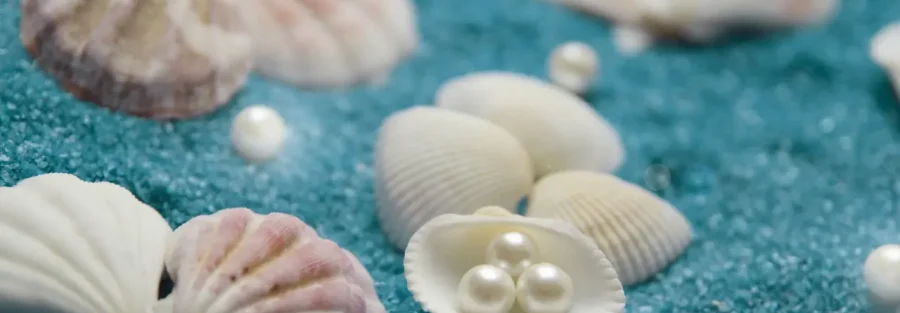
For four thousand years, long before oil and long before fibre, Bahrain made its living by sending people to the bottom of the sea. A diver took one breath, sank on a stone, and felt along the dark floor for oysters. Most came up empty. The whole trade rested on a single quiet skill: knowing the difference between a shell and a pearl. That instinct never left the island. It only changed what it goes looking for.
The stone that pulls you under
Artificial intelligence has a glittering surface right now. Chatbots that write your emails, picture tools, demos that wow a boardroom on Monday and are forgotten by Friday. That is the warm water near the top: pleasant, crowded, easy to splash about in. Bahrain has been less interested in the surface. Its whole approach reads like a diver tying on the stone weight that drops you past the glitter to where the real work sits. Less spectacle, more depth. The question it keeps asking is not “what looks clever” but “what is worth bringing back up.”
Depth over hype – from day one
The depth was prepared years ago. In 2019, Bahrain opened the first Amazon Web Services cloud region in the entire Middle East, ahead of every larger neighbour. At the time it looked like plumbing. Today it looks like foresight, because you cannot run serious AI on ambition alone. You run it on data centres, on residency rules, on bandwidth that sits safely inside your own borders. While others were still talking, the small island laid the pipe and made itself the place the region’s data could live. For a country this size, that is a strange and quietly enormous kind of power.
The part where you hold your breath
A good dive is mostly discipline. You hold your breath, you do not panic, you follow the rope home. Bahrain has treated AI policy the same way. In July 2025 it issued a National Policy for the Use of Artificial Intelligence, adopted the Gulf’s shared manual on AI ethics, and lined up a National Data Sharing Framework to take effect through 2026. None of this trends. Rules about who may touch which data, and how, are the least thrilling sentences in all of technology. They are also the rope you follow back to the surface when the water turns murky. Bahrain chose to tie the rope first.
Not every shell holds a pearl
Here is the honest part the brochures skip: most AI projects are empty shells. They open to nothing. The ones that hold a pearl tend to be the unglamorous ones. Take the Smart Teacher, built by Bahrain’s Nasser Centre and named the country’s best public-sector use of AI two years running. It is not trying to pass for human. It sits in classrooms, available at any hour, explaining the one maths step a child missed, marking the work, shaping a lesson for a single student instead of thirty at once. No fireworks. Just a tool doing a teacher’s most repetitive labour so the teacher is free for the rest. That is a pearl, and you only find it by patiently opening a great many shells.
The Haul
Ask what Bahrain is actually hauling up, and the answer is not a model or an app. It is people. The stated target is fifty thousand AI-skilled Bahrainis by 2030, trained through the labour fund Tamkeen across health, finance, logistics and schools. A country of this size betting on skill rather than scale is the oldest island logic there is: you cannot out-muscle the sea, so you learn to read it better than anyone. And the region noticed. When the Gulf wanted one shared AI strategy, it asked Bahrain to write the document. The smallest boat in the fleet was handed the map.
Coming up for air
So the island that once read the sea for pearls now reads data for the same reason, and the method has barely changed. Go past the surface. Carry weight. Keep your nerve in the dark. Open many shells to find the few that matter. There is a neat symmetry in somewhere this small teaching somewhere this large how to dive.
Which raises a fair question about other waters. Somewhere east of here, a far bigger country with a far younger population is wading into the very same sea, and its dive will look nothing like this one. Different shore, deeper drop, much longer breath. So let us dry the ropes, pack the boat, and save that one for the next trip. We will go diving in Pakistan another day.